Let’s take a look at some easy ways to supercharge your savings and figure out what percentage of your take home income you should be putting away.
How much to save each week or month
Whether you get paid weekly, fortnightly, or monthly, it all depends on how much you earn.
There’s a popular trick called the 50/30/20 budget split and it’s an easy way of working out how much you should save and how much you should spend (although the right amount will be different for everyone) Start by dividing your income into three parts:
50% of your salary is for your basic living expenses like housing, food and utility bills
30% is for the personal spending on experiences you enjoy like restaurants, streaming sites and gym memberships
20% should ideally go into savings.
So, if you take home $1000 a week after tax, that’s $500 for all your living expenses, $300 for the fun stuff and $200 for your savings.
Of course, this is going to vary from person to person. For those who like to feel super secure, or have higher incomes, saving a higher percentage of your earnings may be a goal. If you have a lower income, you might realistically need to spend a higher percentage on your living expenses. Ultimately, it depends on how much you earn and what you’re comfortable with, but this is a good rule of thumb to start with.
Tips for how to save more money every month
Looking for some life hacks to kick your savings into overdrive? Here’s a handy list to help you hit your goals.
- Try meal prepping to have your lunch and dinner sorted for the week so you can avoid those last-minute takeaway meals
- Keep an eye out for supermarket sales and search for discount codes when online shopping
- Make your coffee at home – it’s a small expense, but one that adds up when you drink one or more coffees daily
- Leave a little more time and walk to your destination where possible to save money on travel expenses
- Cancel any subscriptions you signed up for but never use
- Set up automatic transfers so your pay lands in your savings account on the days you get paid.
Tools to help you save
When you open a Ubank account you get access to a range of tools and features in the app designed to help you save more, such as:
- Earn a bonus interest rate on your savings in Ubank Save accounts by meeting the bonus interest criteria each month. With no account fees and the benefit of compound interest, a Ubank Save account can make it easier to grow your savings and reach your financial goals faster.
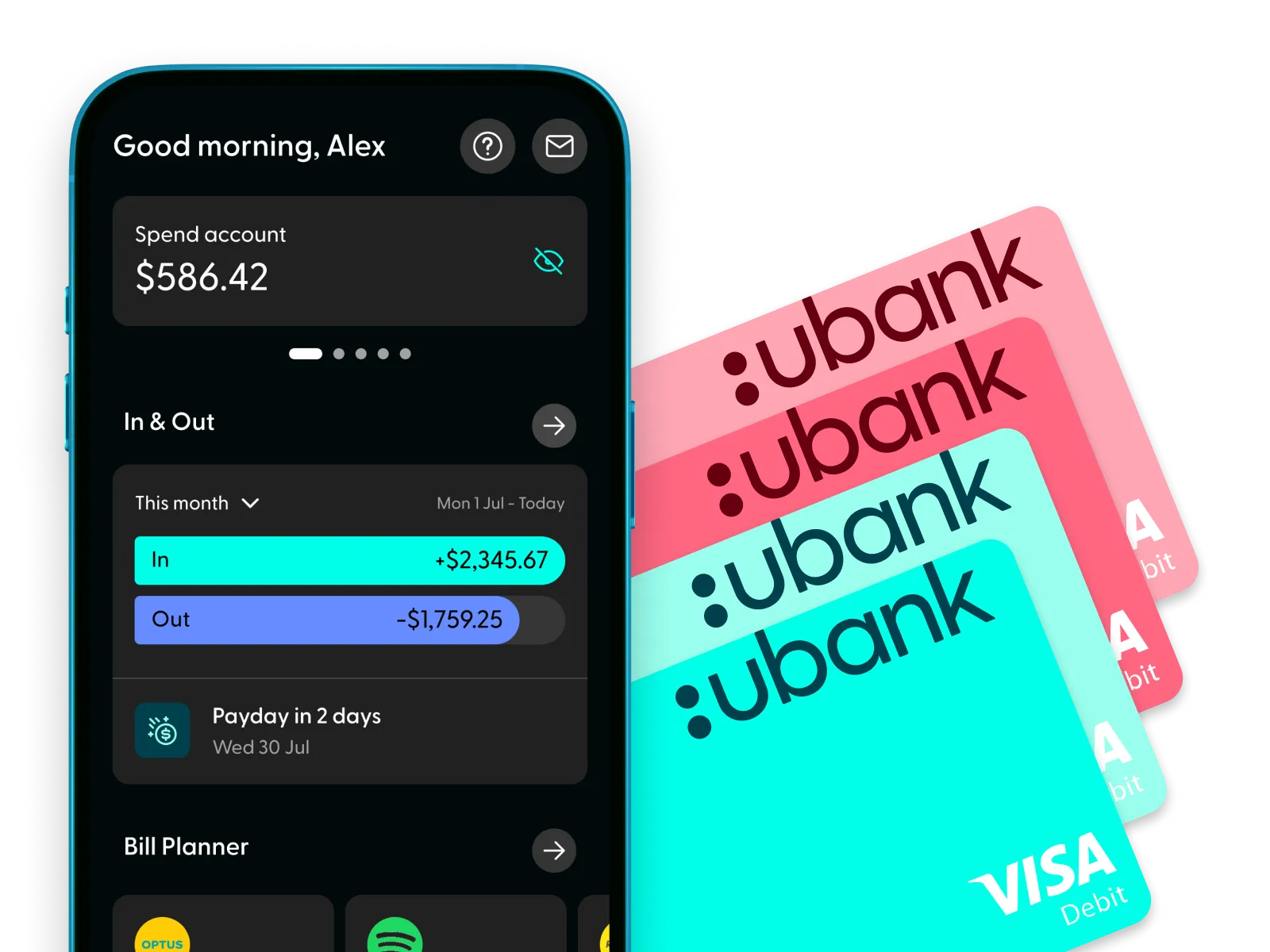
- Make it easy to organise your money with separate accounts for bills, everyday spending and savings. Combined with Ubank’s Split Income feature you can then split your pay across these accounts as soon as you get paid, making it easy to set aside money for each. Using Split income and your separate accounts also becomes the perfect way to apply the 50/30/20 budgeting rule, while helping you stay on top of your money flow.
- Open up to 10 Save accounts and set individual savings targets on each of them. For example, you could have one account for a house deposit, one for an overseas trip, and one for emergencies. Tell us when you want to hit your savings target, and we’ll help you with tools that can track your progress.
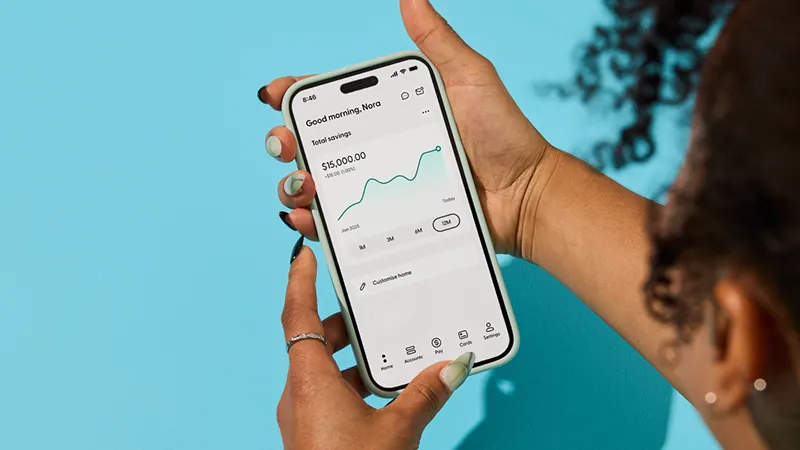
- Connect your other accounts from over 100 financial institutions in our app or online banking, so it’s all in the one place. Our total savings graph makes it even easier to visualise how much you’ve saved across the board.
- Save without the extra effort by utilising Ubank’s Round Ups feature. Round Ups automatically saves your spare change every time you tap your card with each purchase getting rounded up to the nearest $1 or $5. The difference then gets sent straight to a Ubank savings account of your choosing. It’s a simple way to build savings from everyday spending with zero fuss.
At the end of the day, how much you save each week, and how you like to save is totally up to you. Saving isn’t always easy, but it’s always worth it.